Monday, March 14, 2011

Hispanic Female Quotes


Post mortem of Pablo Larraín


Synopsis
Chile, 1973. Mario, fifty-year employee of a morgue, a man sad and lonely, hopeless courting his neighbor, a stripper younger than him. The coup of Pinochet, with the consequent killing of President Allende, change things and among the corpses accumulated in the hospitals and the military chasing opponents, Mario is found for the first time in life in a position of power.


Post mortem the third film of the Chilean director Pablo Larraín , born from the same obsession that made the previous Tony Manero a grotesque psychodrama that even the identity of the inescapable realities of the contemporary Chilean military dictatorship. It includes the 70, again faces the coup of Pinochet and the resulting climate of fear and death on the streets of Santiago, but does not choose a metaphor to serve as a filter for the interpretation, but goes straight to the heart of trauma, the events of September 1973 which led to the overthrow of the socialist government and the establishment of a military junta by the coup and assassination of the President Salvador Allende in office.


Chile today can only start from there, from a reference worn but never completely overcome, yet able to stifle the imagination of a country and sentenced to a thirst for narrative and mythology that leads to cling to any event of national significance, the tragedy of one of the most devastating earthquakes of modern fairy tale for luck or a happy ending of the miners buried alive by the collapse of an underground tunnel. The magnet of history, however, is stronger than the desire to leave, continues to attract unsuspecting victims because they never accepted the daughters of a compressed yet fully realized: the compromise, that is, with the idea the military dictatorship is the founding moment of modern Chilean society. For

Larraín, born in 1976, three years after the death of Allende, the violence is explicit and invisible Pinochet era is a natural condition before, an original sin unspeakable, but necessary, because the only existing his country and people of his generation. The fault lies nell'ineluttabilità of this destiny, in a condition such as natural history in Larraín to get involved and that is the basis of its two negative film ideally almost indistinguishable.

Post mortem, then, is the whole life of Chilean society, addicted and no longer shocked by the death and abandoned to the thud of his own indifference as happens to a doctor specializing in autopsies, the nurse or her assistant clerk in charge of transcribing the results, but not for scientific reasons but existential. The discouragement and abandonment seem to have the same Larraín and the way that looks petrified reality of his country. Post-mortem with choose to add the power of stupidity, making Mario, his man without qualities who takes charge of its destiny, a fascist experienced, indifferent, violent and ambitious.

Yet, at the bottom This path of ruthless self-analysis, Larraín finds the strength to react. There is no surrender, attests to the existence of evil as an ethical foundation of his people, but wondered how to exorcise it, continues in the darkness of history to get to the starting point of the spiral so far, a filmography after only two films have already seen this page, dragged him down and ruin.

Larraín knows where he wants to get there, knows what is the repressed collective of his nation: we just want to get prepared, and especially wants to prepare his audience. To do revolves around the problem, the approaches to scramble play the times of waiting and preparation, suggests but does not show and merely suggest (what looks like the image of the doctor with his helmet last existing photo of Allende, crushed by the military helmet and frightened by the proximity of death?) : you understand immediately where they will come, but not when and how.

obsessive and maybe even traditionalist, Larraín can not come to blame for a Chilean company that fully embodies and which can not fail to recognize their origin. His anthropology is negative natural history, the collective guilt of the individual within a political context, cultural and emotional violence that is in the unique response to change and incomprehension.

The dead body of Allende's body was Larraín that puts the origin of his films, with his magnetic presence makes the real goal of the director: the staging of the guilty conscience of an entire country, meeting with the repressed returns in other forms. Its operation could be worth more cinematic, with a human body that becomes the objective correlative historical and ethical implications of a nation.


addition Larraín can not and does not want to go. His research is a port, but not a palingenesis, and the lucidity with which he confronted the black heart of his country considers but does not redeem, notes but does not change. The accumulation of dead bodies in the hospital in Santiago is equal to the accumulation of debris in which Mario, in the final film, made with a flatbed endless and irremediable, buried alive and her lover Sandra. People and objects are placed on an equal footing, the madness of power generates the madness of the individual and the indifference with which the military kill men and women is reflected in the intent with which Mario kills his love, and earlier in the ruthlessness with which this' Last masturbates her savior. The public is private, just as it was in the Italian squares in the same year the Chilean coup, but ends up upsetting each value and trample the lives of those is involved in the plot of the story.


violence come from, in short, as we return to violence and drawn to a center that we know, but we forgot the face and name. This is true not only for the Chilean people, but also for ours, as we are still steeped in the blood created by terrorism. The years of lead Italy to represent a confluence of public and private abuses similar to that of Chile, a spiral of death and fear that it too has found its way to the bottom of a body to kill and remove ideally, that of Aldo Moro of course that means a film like Good Morning, Night returns as the main reference for the presence of Allende in Post mortem . Although there

Bellocchio approached the body of a man raped power to seek a release that no historical event has been able to implement. And he found it, finally, in a scandal visual equal and opposite to that of Larraín, in a walk along the streets of Moro in Rome, at the dawn of a new day impossible. A dream, but a dream, but also a way, the only film can achieve, to lift our country from the same cul-de-sac in which it seems trapped Chile Pablo Larraín.

Tuesday, March 8, 2011

Accelerated Emt Basic Colorado

Film of the Week - March 9

Potiche - The beautiful statue of François Ozon


Synopsis
France, 1977. When Robert Pujol, tyrannical owner of an umbrella factory, and is forced to move away from the family because of disagreements with employees, his wife Suzanne, hitherto regarded as a beautiful ornament, takes the reins of the company and change the face: it will be the beginning of a new life and a new model of woman.


Potiche - The beautiful statue is a comedy that makes you laugh - and these days, with the crisis that has invaded not only the economy but the whole art, is no small thing. The signal that this is a film successful, without realizing what he had promised too pompous ambition. At the same time, Ozon's film is not only to play movies quotes and even a tribute to Catherine Deneuve , the latest star of French cinema, but clever allegory of France today, his characters policy and its vices and virtues. For better or for worse, you might say.

The interesting question on the film is the mechanism of laughter that it implements. Why, then, as today's audience, the year 2010 (the film was presented competition in the Venice Film Festival last ), we choose to laugh in the face of an operation of vintage aesthetic. The movie is indeed set in the 70s and was shot in the style of the commercial cinema of the time, with the split screen, the light music light, the bright colors of the costumes and furniture, the size of embarrassing hairstyles and unintentionally comic close-ups, zoom and stop alienating. Everything is absolutely hilarious and obvious: we laugh because of the frame kitsch and camp (a term that indicates the universe from its post-modern and flamboyant homosexual culture), you agree to the intelligent and the stupid jokes in the name of a filter recognized and accepted (that of the vintage, the distance of cynical disillusionment). Laughter, then, is not spontaneous, arising from fear and doubt that, as we are engulfed by visual stimuli, we try to deal with any image.

From the top of an iconography that is common practice (the vintage is everywhere, fashion, TV, songs, film, to be precise), François Ozon , openly gay director, brings the figure Deneuve's not even asked to play but simply to draw upon himself the effect of recognition, through its shape requires a model of maternal femininity, understanding, aggressive bourgeois that has nothing ironic.

It is no coincidence that in the second half of the film, once conquered the audience, Ozon begins to run clear references to contemporary society and its ideological distortions (if one can still speak of ideologies). The director is continuing its investigation on the fairer sex, dealing with the relationship established with the politics and power, and coming to talk about feminism, economic crisis, trade union and family with healthy and intelligent laughs and a good eye fixed on the characters of the policy today.

What was said the two main characters are inspired by Nicolas Sarkozy (hysterical in the role of husband illiberal and master of business) and Ségolène Royal (the "beautiful ornament" Deneuve) and add to the figure of the "mailman", so they call the French Communist trade unionist, here in the role of Depardieu. Although the film is hilarious, the mood is really dark and black. None of these characters is saved, each in its own way monstrous and lost, including the entrepreneur policy that eventually Deneuve can remember something (or someone) very contemporary: its political and business parable, after all, what is less significant, seen that the improvement in the fortunes of his company to think necessarily leads to improving the fate of the country. Remember nothing all that?

Tuesday, March 1, 2011

Church Program Example

Film of the Week - March 2

Men of God of Xavier Beauvois

Synopsis

In a monastery in the mountains of Algeria in the mid- 90s, eight French Cistercian monks live peacefully with the Muslim community of the place, treat the people farm the land, pray and live in communion and poverty. But the country is shocked by the massacres of fundamentalists, and even offer protection authorities and the French government to call them back at home, the eight men decide follow to the end of their mission.


Inspired by a true story, the martyrdom of a group of French monks in the mountains of Algeria, Men of God of Xavier Beauvois, which contributes to the quintet of foreign films nominated for an Oscar is not a protest film or reconstruction of a tragic news story. Although the responsibilities of the massacre have never been clarified, Beauvois choose to return the message of peace and coexistence that those monks were put in place in reality and look for the strength of their example, not so much in the speeches a bit ' too programmatic between Christians and Muslims, but in scenes of everyday life, in the sense of love for nature that Trappist grow, respecting men and things you read in the gestures of every day.

Men of God is not a documentary, like the famous Into Great Silence by Philip Gröning, punitive or film. It is a civil and religious allegory in the form of film, shot with a modesty worthy of Robert Bresson, but also with emotional tension and narrative worthy, here and there, a thriller. The director takes us inside the monastery and makes us share the daily life of monks. Which is made of prayers and songs, works in the garden and medical visits to the villagers, but also a morning breakfast lunch and very light, small resentments and jealousies of innocents. The seven monks

protagonists are portrayed as normal and decent people, men of prayer and sharing forced to be heroes (or samurai, as noted by someone, being seven!). Their life is made of simple things, narrated by the film with a force, a sobriety, a truth of accents that are rare in cinema today. There is the daily life of those men who had chosen an Islamic country for their mission. There their efforts inside and outside the monastery, the prayers in Latin and Arabic, work with the residents of that village in the mountains of Atlas, the charm of a landscape so vast and pristine together to create happiness and dismay, the doctor Monaco (the fantastic old French actor Michel Lonsdale ) that anyone who needs free care (including terrorists). And then there's the shock that takes hold of the monks when the fundamentalists are beginning to shed blood in the region, and realize that as Christians they are also targets individuals, the anxious waiting for a meeting that they hope will never happen, the discovery of no less terrible that even in this meeting can find a way to confirm, clarify, strengthen their choices. The (few) detractors criticize Beauvois for having ignored the historical context of the former colony and the events that were behind each monaco (so good they deserve a movie separately). But the look clean and firm with which we follow the expectation of the monks, the welter of contradictory and very human feelings, the whole public debate and ultimately decide that inner everyone to stay, have the force of a film Dreyer and his outspokenness, humanity, the sense of group John Ford.

Men of God becomes a friendly gesture towards the spectators who expect nothing more than emotional involvement. You can tell at one point, during a dinner when the seven monks listen to an aria from Swan Lake by Tchaikovsky, the most famous one could choose the one that everyone knows and they know to follow with emotion. The time is long, intense, and so the music grows quiet close-ups of seven friends who know the fate that they deserve. Beauvois not save the commotion, asked the tear, but not force, it simply puts on the floor of honest men and pure in which you speak, their wisdom and simplicity, to serve their common passions and not wanted, just as Tchaikovsky's music , as enchanting as for the use made of it, granted.

is simple yet beautiful at this time, the film stands as an example of conscious folk art, beauty accessible to all forms audiences. The film is a poignant reflection on how religion can, as a source of love turn into hate, and the pace of the story that Beauvois, precisely because of its message, is more accessible to all. The importance or the power of art is certainly not restricted to its accessibility, of course, but the aesthetic balance of a film like Men of God, is a rare quality, not necessarily the best that film can have, but probably, in times like ours, the most necessary.

Monday, February 21, 2011

Teckdeck Collectors Item

Film of the Week - February 23

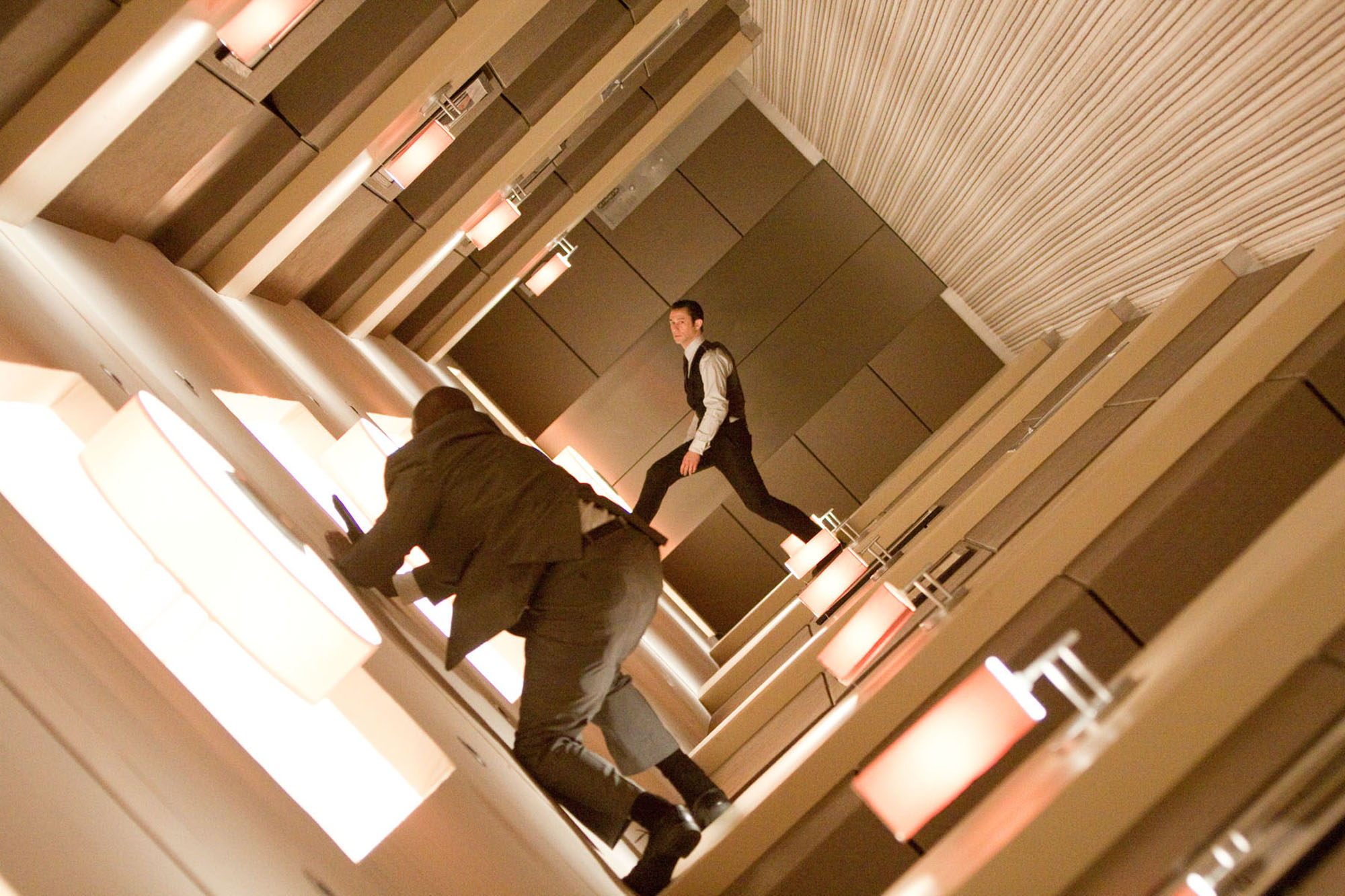
Inception of Christopher Nolan


Synopsis
Sun Cobb is a thief, a thief of dreams, a that enters the heads of people and passing of secrets and dreams in dream research hidden information. At the service of industrial espionage, and his team this time is not trying to steal, but to engage in the mind of a young scion of a controversial idea, but the adventure continues and is more complicated, more Cobb understands him to be the real protagonist dreams in which plunges wildly.


rare example of a blockbuster author, film business financed with millions of dollars, played by star, sold in almost every country in the world, but thought by its author with an almost absolute freedom - what no longer possible in Hollywood, unless you're not the director of the last two Batman - Inception is a work that delves deep into a dream brings another dream another dream, and yet, by the recurrence a movement that does not play a copy, but it varies and increases the space and time in infinite measure. The movement of the film is double, because on the one hand shuns reality to immerse themselves in the dream dimension, but the other is immersed more and more to the crux of the narrative, trying to resolve the trauma that alters the very reality from which he fled.

In this sense, Inception is a classic movie that plays perfectly with the basic elements of Hollywood storytelling, with the effects of condensation and displacement, with a structure of poems (the return of memories / dreams of Cobb), substitutions ( the presence of his wife Mal, that in every dream turns into an enemy different) and broken (still Mal, which appears as a reflection of the unconscious and forced to move from level to level) representing the source of story. In

Inception is a dream - better, more dreams - and dreams, the symbols, are the film itself, its obsessive quest for a primal trauma. A trauma that led to any form of story and that turns out to be the emotional trauma of separation, the inability to unite with each other (hence the inevitable creation of infinite worlds are always different from the dreams of each individual) and the failure of self-realization in the pair, then in the family, that American cinema classic is the only form of reality as possible.

The bond between a father and a son (who himself lives on Cobb If, with a father who abandoned their offspring) is what the heroes of the film trying to change, so entering into a sort of resounding primal scene of American cinema. With Inception is as if we ventured for the first time in place of the unspeakable, what you should not show: a trip is built step by draw, dream after dream, in which Christopher Nolan get to talk about same core of classic cinema. It is a journey that every movement penetrates the appearance of speech. Every dream is a blow to the film surface, the structure, represented with an extraordinary process of visualization as a physical place exists: or the personal imagery of the protagonist, the island overflowing with buildings that collapsed with the transition from a dream to the next, and fragile encyclopedic accumulation of memories, desires, hopes, obsessions.

staging city that doubled up and came back to bite them, imaginary cities that collapse to leave the skeletons of the structures, Inception gives visual form to the dreams that architecture is one of the key issues of our society: the space is the real star the film, while the time an object is used and its context. Here the space is the projection of desires and extent of the failures, it is imagination above the sense of measure, that doubles infinity, mirror against a mirror, the figure of a man placed in an urban environment, by moving out equal and opposite to that, however, leads to a single port and is recognized and recognizable: the house from time American cinema. Because even

Inception finds its culmination so far is the heart of every classic film in the symbolic dimension that is family and that place is just as symbolic of the house. Overturning a formula often used to define the melodramas, one could say that here Heart Is Home Is Where The "is where the heart is home." As already Shutter Island of Scorsese, with whom Inception has several points in common, the house indicates the end of a wandering mind in particular. The difference is that Scorsese choose an imaginary movie buff ( Her to Heaven by John M. Stahl), while Nolan re-contextualizes the iconography of the American house.

The DiCaprio of Inception , such as goat Shutter Island, in the final of fi lm
enters a house where lies the origin of every dream, so each story. The house in which it waits for the woman he loved and lost stands alone and untouched in a cluster of crumbling skyscrapers, the strangeness construction of the place in which it appears it is clear, his appearance refers to the known and familiar form of a primitive place. Building the film as a continuous cleavage of narrative units, space and time, Chinese boxes that contain each other and slip over one another, Nolan brings me to the heart of the film, the American family home inside it contains another box (safe), which in turn contains the object-totem of the film, the spin, the objective correlative of a world constructed from continuous centrifugal forces, but contained in a single element which no coincidence that it moves only on itself, without progress in space.
The top of
Inception , which leaves doubt as to the real end of the journey, is the sign of the contradictions of American cinema: the desire to match everything to resolve any repetition, and at the same time the fatal necessity of reviving the 'idea of \u200b\u200basymmetry and therefore the possibility of building other countless ways, countless times and endless stories. Inseparable in its smallness, the film focuses in part, as well as the blue box Mullholland Drive embodies Film Lynch. But what the world was a double outlet, the suction in the darkness of death and rebirth that gave rise to a potentially infinite film, able to build any world from its own elements, there is a movement that enshrines the perpetuation of the cinema as the construction of dreams, but also the fragility and the failure of all its construction: the usual places for each port are always there, always symbols of the usual emotional trauma, with the waves that fold in on themselves and mimic the forward movement of the film, slowed by a push in the opposite direction. When we dream, after all, we are convinced that they can not get out of the dream.

Tuesday, February 15, 2011

Vehicle Inspection Sticker Maine

Cineocchio - Film of the week, February 16

Passion of Carlo Mazzacurati


Synopsis
The tragicomic story of filmmaker John Dubois, a former promise of the cinema in disgrace, on the eve of the return on the screens with a film starring a young and popular television actress, is locked in a small town in Tuscany, and here reluctantly forced to head the popular representation of the Passion of Christ.


is symptomatic of the current state of the country if the Italian cinema has long since been eaten by the television and if the dialogue between the two is strongly unbalanced by the second. Television has won the battle for popularity and seduction Collective film and therefore has earned the right to speak first, to create characters and comic figures who thrive on the small screen and then there's also a great comment on. With Checco Zalone and Cetto La Whatever , to remain the last blatant examples, it went like this: the TV has launched the smash and films that followed have been limited to ennoble or to prolong their existence. The cinema, or at least the commercial cinema and comedy in which recovery is normal and spectator needs, not to pursue the televised speech, but only repeats, the maximum extension.

Carlo Mazzacurati , which is a real director and not a performer, as Gennaro Nunziante or Giulio Manfredonia, knows this and when he decides to run an Italian comedy dated 2010 is at the edge of the problem, a first step yield dynamics television, a step beyond the ability to think in terms of comic cinema. His passion laugh, laugh a lot, but it does so as a successful and well-written fiction: with the rapid sketch comedy, with sketches of the characters who prevail on their psychological definition, with the presence of Corrado Guzzanti which simply update her gallery of magnificent and horrible freak television. The same comic vitriol on the world of Italian cinema, which created the funniest jokes in the film, is nothing but the repetition of verve acid Boris, his self-indulgence and good nature of his disguised malice.

is not to pillory colleagues and opponents who would like to Mazzacurati , even with all the irony and fun uses. Nor is the ingenuity of the province to interest, having previously crossed, and with much greater force, that world of structured ambiguity. Rest is a painter of landscapes, human and social, but with the understanding that the impairment of vision television has permanently altered the ability to discern reality. The world on stage, superficial and Sketches, with a spot of Tuscany and a language to the vernacular, is the only one at the moment the comedy films can afford, the only game that the public agrees to play to get to laugh.


Passion then is the story of creative impotence which results in existential impotence. The inaction of John Dubois, director without inspiration and unable to lead a popular representation that seems to go on stage alone, like a film without a director, like any product comic Checco Zalone or Ale e Franz , is the sign of the defeat of the cinema than on television. There is not Mazzacurati behind the stereotypical image of the impoverished former promise, there is the very idea of \u200b\u200ba historic defeat, the superficiality of any talk conducted with the rules imposed by the television show.

Everything is flat, two-dimensional, built: not, however, as the tableau of a medieval passion, but as a screen without depth. It is no coincidence, then, that anger at one point he vents not as a reaction to bad luck, but as outrage at the shameless mockery of the common viewer, insensitive to the point of laughing a fat man falls to the ground and did not notice to attend a performance of true three-dimensional representation of the real passion of a modern, the only possible today: passion, that is, the different, the last of the single subjectivity which does not adapt collective emotion and therefore deserves ridicule and rejection.

It is no coincidence, then, that once broken the veil of anything with which he wrapped up his play (inevitably) television Mazzacurati chooses to close his film with another film, which is independent cinema at least , created by the mind finally free of Dubois and then unveiled the story, a story of escape and liberation chooses to place a character on the edge of a world to discover, beyond which lie the unknown, the unexpected, the new perhaps.

Friday, February 11, 2011

Necessary Boho Clothes

Film of the week - February 9

The Prophet of Jacques Audiard


Synopsis
The nineteen year old Malik was sentenced to six years in prison. Young and fragile, but despite being nearly illiterate extr intelligent, Malik begins to carry out "missions" for a group of inmates courses that have imposed their own law within the penal institution. Over time, the boy gained their full confidence soon able to exploit the situation to their advantage.


The film may contain a gender? How the world can get into a movie? Majestic for life and ambitions, the prophet openly challenge their idea of \u200b\u200bthrowing bombast in the field laws (fundamental but unwritten) of cinematic storytelling.

First, the space : a Parisian prison, a place complete, anonymously, a no man's land where the national identity, dispersed in a globalized society and for this contested by political forces as a weapon of offense, it retrieves the value of ethnicity and belonging, "tribal" to decide the survival or abuse of any prisoner. Then, the time : endless, as for all those who end up in, no matter if sentenced to one year or thirty, time slows down and speeds up, time to wait at the decisive moment that can cut or save a life . Then a face and body, a hero Malik, played impressive Tahar Rahim, a statue of impassivity that strengthens gradually with the knowledge of prison rules and awareness of its value without changing expression, rigidity of classical form on which to project the identification of the viewer. Finally, the world and its infinite stories: stories of political prisoners with the time course become gangsters, thugs killed in a test of courage that look like ghosts, fellow lock with cancer, a widow and to care for a child, stories of secret wars between North African and French, of unknown languages \u200b\u200bto learn to save his skin, stories of power and control, ambition and fear. Stories of Men, in short.

Men Audiard, from Malik, does not forget never to put at the center of his film, the first of the narrative and the rules of the prison film, turned over the structure of the genre, staging what is the rise to power of a prisoner smart and brave, but especially the history of its survival, its reaction to that very human thing that is fear.

is that, in fact, that the prophet speaks : instinct, a guy who works to win and not die, what reason coolly on its choices in response to a desire for animal life. The genus survives the fall and rebirth of his parable, because it never overpowers the central and at the same time does not waive its own rules, to their drift (the ghost of the first victim of Malik, premonitions almost divine, the final impression biblical ironically) and improbabilities (all those dead in central Paris and no one bat an eye!). Rather, an event that crosses subtrack Malik in the heart but that never fails to regenerate, to breathe like a piece of real life.

Malik is the privileged view of the story, his physical presence is the source of each event, but in his lonely battle to get to guide the institution that has locked up is just one of many pieces, the main, prepared by world Audiard. That world exists outside of prison and finds space not only in the temporary exit of Malik, but also in the faces of men and women in the scenes glimpses of the parlor, past the shoulders of the protagonist and beyond the lifetime of each scene, thanks to ' delay of the camera.

There is a continuous breath that pervades the images and stories of the prophet . Audiard handles extraordinarily fluid that accumulates on the gusset piece, choosing to divide it into several chapters to important and useful life, devoted to each character met in prison Malik. A structure that, without fearing the risk of comparison, has reminded us that of Rocco and His Brothers , because basically it is the pitch masterpiece maximalist Audiard has miraculously found. The pace of the story that embraces all and understands all pleased to enclose an anxiety in life within the cinema.

Tuesday, February 8, 2011

Distributing Monster Energy Drink

Cineocchio 2011, we begin


From begin Wednesday, February 16, the projections of cinecircolo The Cineocchio : 12 films of the current season, witnessing the best Italian distribution between 2010 and 2011, often unknown in the city Alba and from around the world. Projections on Wednesday
and Thursday of each week. Ordet Hall, Sunrise: 20:45
passes at 20 €, available at: Library Tower - Saint Paul Library - Video Library Casablanca.

It begins with passion Carlo Mazzacurati (Ita, 2010). And to follow:

February 23 Inception Christopher Nolan ( id. , U.S., UK, 2010)

March 2 men of God Xavier Beauvois ( Des hommes et des Dieux , Fra, 2010)

March 9 Potiche - the genius that was my wife by François Ozon ( Potiche , Fra, 2010 )

March 16 Post Mortem Pablo Larraín ( id. , Chile, 2010)

March 23 The Social Network David Fincher ( id. , USA 2010)

March 30 Animal Kingdom David Michod ( id. , Aus, 2010)

April 6 Gorbaciòf Stefano Incerti (Ita. 2010)

April 13 American Life by Sam Mendes ( Away We Go, USA, 2009)

April 20 Hereafter Clint Eastwood ( id . , USA, 2010)

April 27 I am with you by Guido Chiesa (Ita, 2010)

May 4 In a better world by Susanne Bier ( Hævnen , Dan-Swe, 2010)

Monday, January 31, 2011

Play Pokemonsoul Silver Online

Film of the Week - Feb. 2

The secret of his eyes of Juan José Campanella


Synopsis
Benjamin, a former employee of the Ministry of Public Buenos Aires, he retired to write a novel. As a subject has chosen the unsolved murder of a young woman occurred just months before the start of the military dictatorship of Videla. Between past and present, memories of the 70s and love for a colleague, Benjamin tries to unravel the mystery, and so of his life.


The secret of his eyes, the film Argentine winner of last year 's Oscar for Best Foreign Language Film (in spite of such masterpieces as The White Ribbon and The Prophet, film closure of the nucleus), is a work by special charm. It is a traditional story from the plant, with flashbacks and events in the present tense influenced by past ones, and inspired a popular pace, according to its director, the Italian cinema and American cinema of the 70s.

Maybe that's why "classic" components which differs from the films of other directors of the new generation, which belongs to the same Campanella, the various Burman, Trapero Martel who collect and participation in festivals count, but they are rarely distributed outside of their country. As in the Italian cinema of the times of Gassman and Manfredi, then Campanella has a fondness for big players, a kind of acting class and seductive: acting, so to speak, that can provide an interpreter as Darín Ricardo, who is one of the most star in Argentina and that of your eyes Secret embodies the figure of a little 'sweet and a bit' tragedy of a man in this tired, sometimes desperate, that sets in motion a mechanism to avoid going down slope, with its qualities of humanity and the light that flashed in his eyes.

Beyond all these elements that make the film work and sound perfectly crafted, halfway between the auteur and entertaining thriller, what characterizes it most is the reference to the recent history of Argentina, a position a tragedy and uncertainty that make it a perfect subject, however painful, to the cinema. The secret of his eyes enters the living flesh of the company with issues such as corruption, the feeling of revenge and power, filtering them in the manner of classic cinema through a love story whose importance in the plot comes and goes depending on the moment.


This is because the various floors of the story, between the fiction of the novel that the protagonist writes and real facts that you inspired in part by the story of the investigation and, precisely, the love story between the memories of thirty years elapsed between dictatorships and democratic transformations painful, meet and merge with the investigation and section tribunalesca that seems to prevail. Whether this has to do with the development of memory that involved the entire Latin American continent, Argentina so striking for the processes to those responsible for genocide, it seems clear to us, but the director is an issue which is not party intentionally writing the screenplay from the book of Eduard Sacher his usual co-writer. Without revealing the plot, one could say that the structure of the film has to do with the complex mechanism of cancellation of the past happened in the country and the vigilant prosecution of those responsible and not a single murder. It has to do with the moral rigor of a country through its protagonist feel not to have lost dignity and who tried to rise again after the dictatorship and the collapse of the economy.


If once, in fact, the worst enemy of memory was the time, now is the avalanche of information that sometimes confuses and mixes everything into an eternal present. On this ground, on which the film still has many cards to play, especially in countries with memory have an account, The secret of your eyes is a perfect example of this work he uses with skill genres (police and melodrama in particular) to dig into the memory.

to continue to live because it is easier to avoid thinking about the past. There seems to value more than the film that is now proceeding romantic, now full of suspense, always with interpreters is available to fill the screen with their presence.

Tuesday, January 25, 2011

Can Selsun Blue Help My Dog

Film of the Week - January 26

About Elly of Asghar Farhadi


Synopsis A group of friends in Tehran, forty married and wealthy, is organizing a trip out of town to celebrate the return of Ahmad in Iran, returned from Germany after the divorce from his wife in Germany. Elly also invited to the holiday, a young friend recently known, in the hope that between el'invitato you can be born a special relationship, but when she disappears without a trace, perhaps drowned at sea probably escaped from his family ties and the certainties of the crumble.


About Elly is the international title of an Iranian film of 2009, which was successfully presented at the Berlin Festival, which is called original Darbareye Elly. Would be translated "About Elly," and frankly do not see why the Italian distribution has not named (maybe because with a title like that someone might mistake it for a Hollywood comedy). But not too angustiamoci, is already About Elly something has come in Italian cinemas, and later in the film club circuit, more than a year and a half after its first public screening.

The peculiarity of the film is that it does not belong to the iconography of Iranian cinema standard. There is no fact in the film, the fixity of the typical look of that film, there is concern for the disadvantaged classes, there is the constant presence of the nation state to suppress individual freedom. Or rather, there is each of these things, but for once hidden beneath the surface of a work of bourgeois setting, with characters belonging to the wealthy class and involved in a sentimental drama that gradually becomes the chronicle of a disappearance.

Some interpreted this as the narrative structure is a clear homage to a classic Italian The adventure of Michelangelo Antonioni, with the center of the story a group of young people on holiday, with the disappearance of a girl who disrupts the lives of all and radically changed the relationships within the group. The difference is that, where Antonioni threw the very existential, Asghar Farhadi, director of Ahmadinejad in Iran, can not help but be more specific, and talk about the world and the society in which its characters, although not too different from Western, are forced to live.
It is in this way, through the trigger mechanism of a clear narrative (the disappearance of a person), the film shows the merciless portrait of the constraints to which every individual is subjected in a society permeated by the control of the state and religion .

The drama is not is never fully revealed, the identity of the characters involved remains ambiguous, as the resolution of the case: but just the perception of the doubt, the hole in the veil of normality that people are trying to create around himself to undermine an entire world and its values. The vacuum is built on the existence of the protagonists of About Elly is revealed in all its depth when fear makes them naked and in particular hints at the possibility of punishment and repression. It does not happen anything illegal or scandalous in the film, but the same idea that it could happen already enough to create havoc and suffering.

For us western light years away from the subtle, pervasive, and that is even more violent suppression of freedom, it is impossible not to think about the riots and the reactions that followed the presidential election two years ago or more episodes to come Recent Sakineh the process or to imprisonment of the director Jafar Panahi . It is impossible not to think that the protagonists the film, educated, urban and affluent, are not the same protesters who have poured into the streets of Tehran after the announcement of Ahmadinejad. But the film Asghar Farhadi not observe them from afar, as a whole, as a social and political, but up close, one by one, caught in a moment of personal crisis and family says a lot about each of them or the fragile balances (on unseen hypocrisy daily) that support the dominant moral thirty years after the Islamic revolution. Generating, on the story, a tangle of inextricable embarrassment and pain as well be taken for the cultural distance, an almost metaphysical. Even if everything in the film (which never names faith and precepts religious) tells us about history, practicality, a here and now than ever, perhaps the Iranian cinema has shown more explicitly.

Tuesday, January 18, 2011

Buy Fake Community Service Letter

Film of the Week - January 19

Somewhere Sofia Coppola


Synopsis
Johnny Bravo is a Hollywood star: he lives in the legendary Chateau Marmont hotel, spends his days between alcohol and women, makeup sessions and press conferences, receives invitations from around the world and also has an eleven year old daughter who rarely seen. Only when it is to spend more time with her understand what is the affection and, above all, what's enviable life is really an insignificant number of events.


Somewhere, the film won the Golden Lion last Venice, represents a new foray Sofia Coppola physical and moral vacuum in the film, after Lost in Translation (2003). Telling the story of a non-actor that profligate spending days with his daughter and realizes he wasted his life, Coppola returns to the alienation and irony of his most famous film, return even the stillness of the gaze and amazement wounded in front of the flashy costumes and phony show business.

For this reason, the film does not look like the original or surprising, but the screen lights up with its minimal. Sofia Coppola has talent, no doubt about this, and although he works more on the same elements (the loneliness of the individual in the face of reality and history, the disconnect between perception and experience, the dialogue between innocence and wonder ), his film is great fun and who knows how to move sections.

From The Virgin Suicides Lost in Translation to the Coppola has always imposed bully his world apart. Actor Johnny Mark, as the Italian-American director, lives in the legendary Chateau Marmont camped, built in '27, smelling of legends, ancient and European enough to be out of fashion: the stars, from Boris Karloff to Greta Garbo, James Dean Marilyn Monroe, Paul Newman, who lived at certain times of the lotus lives in small apartments who know Loire Valley. A simple place, as it often is Los Angeles where John Belushi thought well of tangled until his death in 1982. This is where Johnny Mark lives his non-life, low-cut but unable to lift ourselves from the world outside, inside the system but only able to suffer it. Are tangled up, drunk and falls asleep in front of the lap dance of two popcorn venus (in one of the most brilliant scenes the film, in which one understands the trick of seduction portable and removable), entertainment for children of the divine catatonic, required to set photographs and press conferences surreal. Johnny Mark is a "nullity", has done drama schools, is a star by accident, not by chance that we hear things like: "I am not a person." But it is pretty and like, girls like eating cake, with acts from automatic, and goes to sleep between my legs last conquest. Until

Cleo arrives on the scene, eleven years, his daughter. And the film is a remake of Lost in Translation , if possible, even in the most lucid discussion of the existential void of its protagonist. Sofia Coppola fishing in the archive memory of Francis Ford , when my father dragged her for hotels all over the world. But I also think the film that Coppola did when his father began to make great cinema in the '70s as a friend and colleague Peter Bogdanovich that with the magnificent and forgotten Paper Moon already recounted the difficult relationship between a father and baby daughter as a funny comic-philosophical treaty to Peanuts, as if the characters were so many Snoopy, Charlie Brown, Linus or intent to look at the stars around while someone is agitated.

The only time the Coppola seems to tread in the hand out the game easy but always fascinating irony, grotesque and absurd, is when the Hollywood star and her daughter flying to Italy to withdraw Telegatto. The situation is a bit exaggerated and even 'demeaning (ok that sucks, but do not put stuff like that scene in that way even in the days of Ocean's Eleven), but it makes a precise dramatic separation between reality and his sham. What you see at the cinema (and television) is a miserable-looking curtain raiser between the appearances of obscene Simont Ventura, Maurizio Nichetti, Nino Frassica, Valeria Marini and Laura Chiatti that will play well for those concerned ironic, but for the Coppola represent the recurrence of a nightmare that he must have scored when he accompanied his father at an award ceremony.

The film then takes over the story again and incarta nothing left except the knowledge that everything flows, nothing remains in his hands who tried to seize on this (his father abandoned his daughter again and knows it can be missed at any moment). The only sure thing is the camera, the unique look, the only real presence in the film, the only instrument able to conceive the annihilation of the inner character.

Tuesday, January 11, 2011

Stroke Volume Normal Volume

Film of the Week - January 12

addition to the rules - The Messenger
Oren Moverman


Synopsis
Sergeant Montgomery returned from Iraq have received a new assignment: along with Captain Stone will announce to the families of the fallen death of their relatives. A terrible job, hard to bear, William tries to do with posting until it falls in love with one of the women who announced the loss of her husband.


Released last April after nearly a year of incubation, despite the award for best director at the Berlin Film Festival 2009, addition to the rules - The Messenger is one of the great American films of recent years and especially one of the few truly successful works on the war in Iraq.
After so many unnecessary or botched film ( Lions for Lambs or In the Valley of Elah to make an example of two works decent but out of time), the directorial debut of screenwriter Oren Moverman (formerly canditao all ' Oscar I'm Not There), addresses this conflict by a dramatic and controversial point of view. In fact, the film tells the life of those soldiers who have the thankless task of communicating to families facing the death of their relatives: the issue is one of those powerful, which can not remain indifferent, and if possible the film, with its expressive dry , with its ability to convey the emotion and pain on the scene, often using a fixed platen and the sequence makes it even more urgent and intolerable.

addition to the rules is a shot in the chest, a sort of "Ludovico treatment" for the heart, as much as that of A Clockwork Orange it was for the eyes and morality. Overman forces its viewer to look at what you would never see, what, eg, Steven Spielberg in Saving Private Ryan filmed from a distance, in silence and in silhouette, with a woman who came to know of death of her son in war and slumped to the ground overcome with grief. Moverman instead choose to stay with the characters, with the messengers and the victims' side ", located behind the two main characters and the machine that shakes between. In this way, it shows a subjective point of view almost the suffering of others, the consequences of historical madness live on the body of the people involved. The camera does not detach, never interrupts the flow of the scene, but chooses to challenge the highest level of emotional tolerance, perhaps to overcome it and so confront the real consequence of war: the pain and helplessness of those who remain of the beholder .

Because impotence is primarily ours, for us viewers who watched the movie (or listen to or read a news story) and we have nothing else to do but watch, worry or become indignant, but never really suffer. Beyond the rules , however, calls for an investment of responsibility on the part of the viewer. Calls on hold and courage. The stars are the messengers, the relatives of the victims and the suffering we witness the viewers. If you try for once genuinely sorry to see the intolerable length of a scene of grief or surprise, will be the compensation for all the dramatic news digest dinner time, or in front of the computer screen, and immediately forgotten because distant from us.

For once, we'll look and ask why the we are doing. The cinema is at the bottom of this.